


The Wildlife of Victoria Falls: What You'll Actually See, and Where
The river runs the whole show
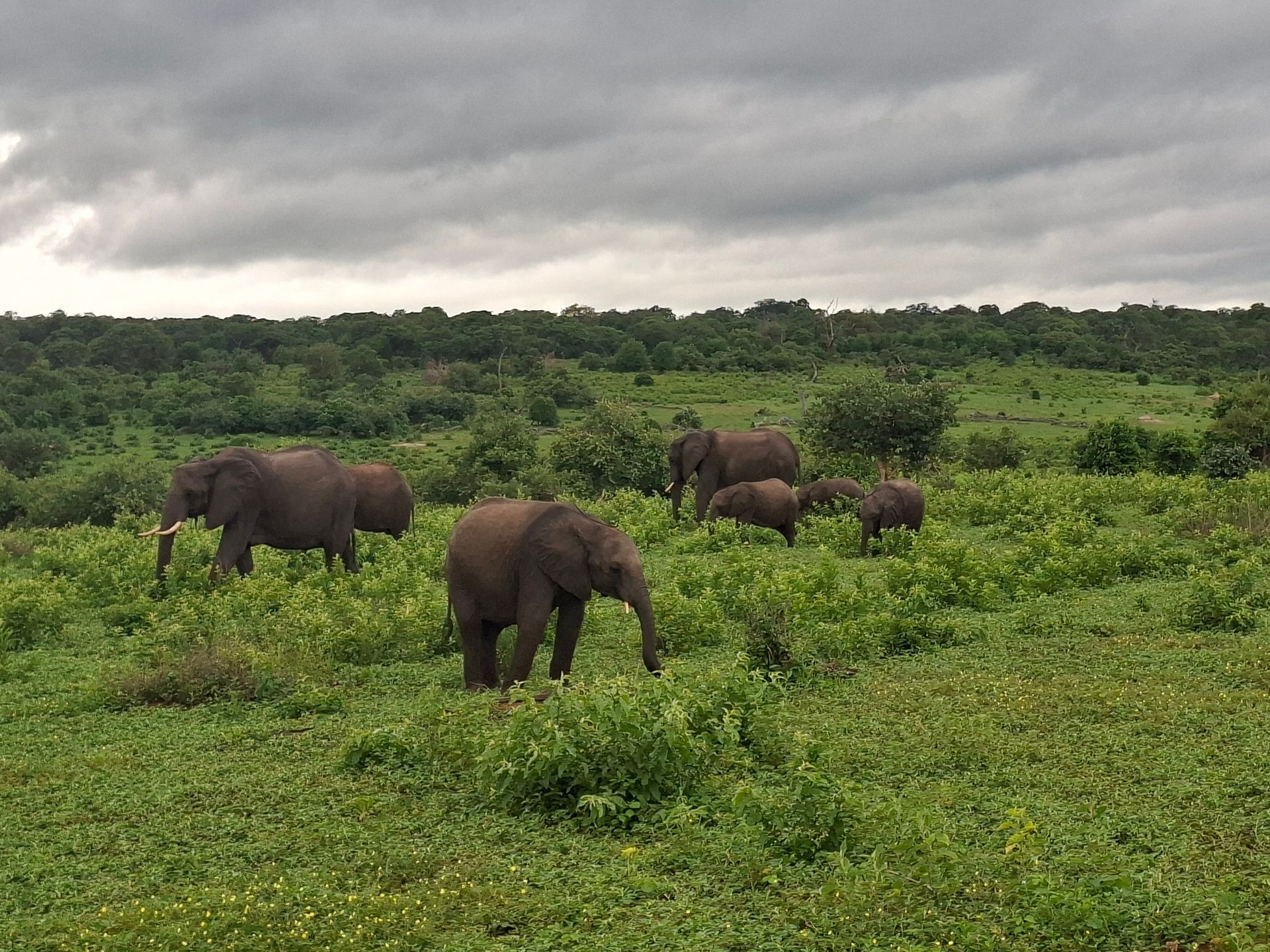
Most people come to Victoria Falls for the falls. They leave talking about the elephants.
It surprises people every time. Victoria Falls isn't a fenced safari park — it's a town and a river that wildlife moves through on its own terms. Elephants cross the road into the national park. Hippos surface mid-cruise. A fish eagle calls from a dead tree above the gorge, and someone on the boat realizes that sound is what Africa actually sounds like. You don't need a week-long safari itinerary to see real animals here. You need to know where to look, and when.
Here's an honest guide to what lives around the Falls, and where you're likely to find it.
The river runs the whole show
Everything here orients around the Zambezi. The river is the reason elephants cross at certain points and not others, why hippos cluster in the slower stretches upstream of the falls, and why the gorge below the falls has its own smaller cast of animals that never go near the river at all.
Two national parks sit on opposite banks: Zambezi National Park and Victoria Falls National Park on the Zimbabwean side, Mosi-oa-Tunya National Park on the Zambian side. None of them are large by African safari standards — Mosi-oa-Tunya is just 23 square kilometers — but that's part of what makes them workable for a short visit. You can do a morning game drive and still make lunch.
Elephants: the animal you'll see without trying
African elephants are one of the most iconic inhabitants of the area, and visitors have sometimes seen them roaming the streets of Victoria Falls town itself, though they generally avoid human settlements when they can help it. Your best odds for a proper sighting are along Zambezi Drive, the road that runs through Zambezi National Park — small herds are regularly found there and in Victoria Falls National Park, and it's not unusual to pass one or two while driving or walking the road.
If you want guaranteed elephants and a lot more besides, Chobe National Park in Botswana is worth the detour. It's under two hours from Victoria Falls and holds one of the largest elephant concentrations anywhere in Africa.
Hippos and crocodiles: the river's permanent residents
The Zambezi River and its banks support thriving populations of hippos and crocodiles year-round. You'll often hear hippos grunting from the water before you see them, and a sunset river cruise is genuinely the best way to watch them without disturbing anything — they surface, submerge, and surface again along the same stretches every evening.
Crocodiles bask on the sandbars and quieter banks. They're easy to miss until a guide points one out, at which point you'll wonder how you missed it.
Where the bigger game hides
If you want zebra, giraffe, buffalo, or the rarer sightings like rhino, you need to go slightly further than the falls themselves:
- Mosi-oa-Tunya National Park (Zambia) — home to buffalo, elephant, Burchell's zebra, giraffe, bushbuck, and sable antelope, and one of the only places near the falls where you can spot white rhino.
- Victoria Falls Private Game Reserve (Zimbabwe) — roughly 2,500 hectares of savannah a short drive from town, and your best bet for a proper herd of zebra.
- Stanley & Livingstone Private Game Reserve — a fenced, intensively monitored reserve and the only realistic place near the falls to see black rhino in the wild, a direct result of anti-poaching efforts in the region.
- Zambezi National Park (Zimbabwe) — mopane woodland and forest where African wild dogs, giraffes, waterbuck, bushbuck, impala, and sable antelope live alongside the more commonly seen elephant and buffalo.
Lions and leopards are around, but they're night hunters and genuinely hard to find. A night game drive is the only realistic way to see one — daytime sightings are mostly luck.
The smaller cast: monkeys, birds, and the gorge specialists
Not everything worth seeing is large. The woodland around the falls is full of chacma baboons, vervet monkeys, and banded mongooses, and they're around constantly — on the rainforest trail, near the lodges, occasionally on someone's veranda.
The birdlife is the real depth of this place. More than 470 species have been recorded in the parks and surrounding area, including Pel's fishing owl, African skimmers, the Taita falcon, African finfoot, Verreaux's eagle, and the African fish eagle — the bird whose call you'll hear echoing over the gorge more than almost any other sound. Below the falls, in the gorge itself, look for klipspringers and clawless otters, alongside breeding raptors like the peregrine falcon and black eagle.
A few honest tips
Go early or go at sunset. Animals are most active in the cooler hours, and the light is better for photos either way.
Take a guide, even for a short visit. Local guides know exactly where to find the animals on any given day — wildlife moves, and a guide's read on that day's movement is worth more than any map.
Bring binoculars. Half of what you'll see is across a river or deep in mopane woodland. Binoculars turn a distant shape into an actual sighting.
Keep your distance from anything large. Elephants and buffalo are intelligent animals that have adapted well to life near people, but they should still be given a minimum of 10 meters of space — don't approach, and never feed them.
Victoria Falls rewards patience more than itinerary-planning. Spend a morning on Zambezi Drive, take a sunset cruise, and let the rainforest trail be slow. The wildlife here doesn't perform on a schedule, but it's almost always somewhere close — closer than people expect when they arrive thinking the falls were the only reason to come.